The $1 Billion Ethiopian Bible Scam
We bought 14 "Ethiopian Bibles" to find out if the story was real. 13 of them were frauds. This is what we found — and the one edition that passed every test we could throw at it.

Thirteen out of the fourteen Ethiopian Bibles I bought in the last six weeks are frauds.
Not "lower quality." Not "questionable translation." Outright, deliberate, deceptive frauds. The kind being sold to grandparents and Christmas gift-buyers right now, today, while you read this. The kind that arrive looking exactly like the photo on the website and contain none of what was promised. The kind that get opened on a birthday morning and read every night for thirty years by an old man who never knew what he was actually holding.
I am an investigations editor. Fourteen years. I have exposed two fake Dead Sea Scroll fragments sold to American collectors for six figures and a Holy Land relic ring operating out of a New Jersey warehouse. When something is too good a story, my job is to find the lie inside it.
Six weeks ago I went looking for the lie inside the Ethiopian Bible. Maybe your Facebook feed has been showing you the same ads mine has — the suppressed books, the eighty-eight-book canon, the church councils in 363 and 397 AD that voted twenty-two books out. It's a hell of a story. It is also exactly the kind of story I get paid to be skeptical about.
I expected most of the editions to be fine and a few to be sloppy. What I found, after six weeks of testing fourteen separate copies on this publication's research budget, broke me in a way I did not expect.
The Ethiopian Bible itself is real. What is being sold to Americans under its name is something else entirely.
The Ethiopian Orthodox Church has guarded the eighty-eight-book canon for sixteen hundred years. Surviving manuscripts in mountain monasteries are older than every King James Bible on earth combined. The Dead Sea Scrolls match the Ethiopian texts word for word. None of that is disputed among scholars who have actually read Ge'ez.
Before this investigation is over I am going to give you the four tests that separate the real one from the thirteen frauds, ask you to run them on the copy you already own, and tell you what I learned the morning I got put on the phone with a Ge'ez translator who had no idea I was a journalist. But first, you need to see how the scam works — because the tests only make sense once you understand who built the fraud you are about to test for. And the fraud is not being run out of a church basement by misguided believers. It is being run out of a co-working space in Tampa, Florida.
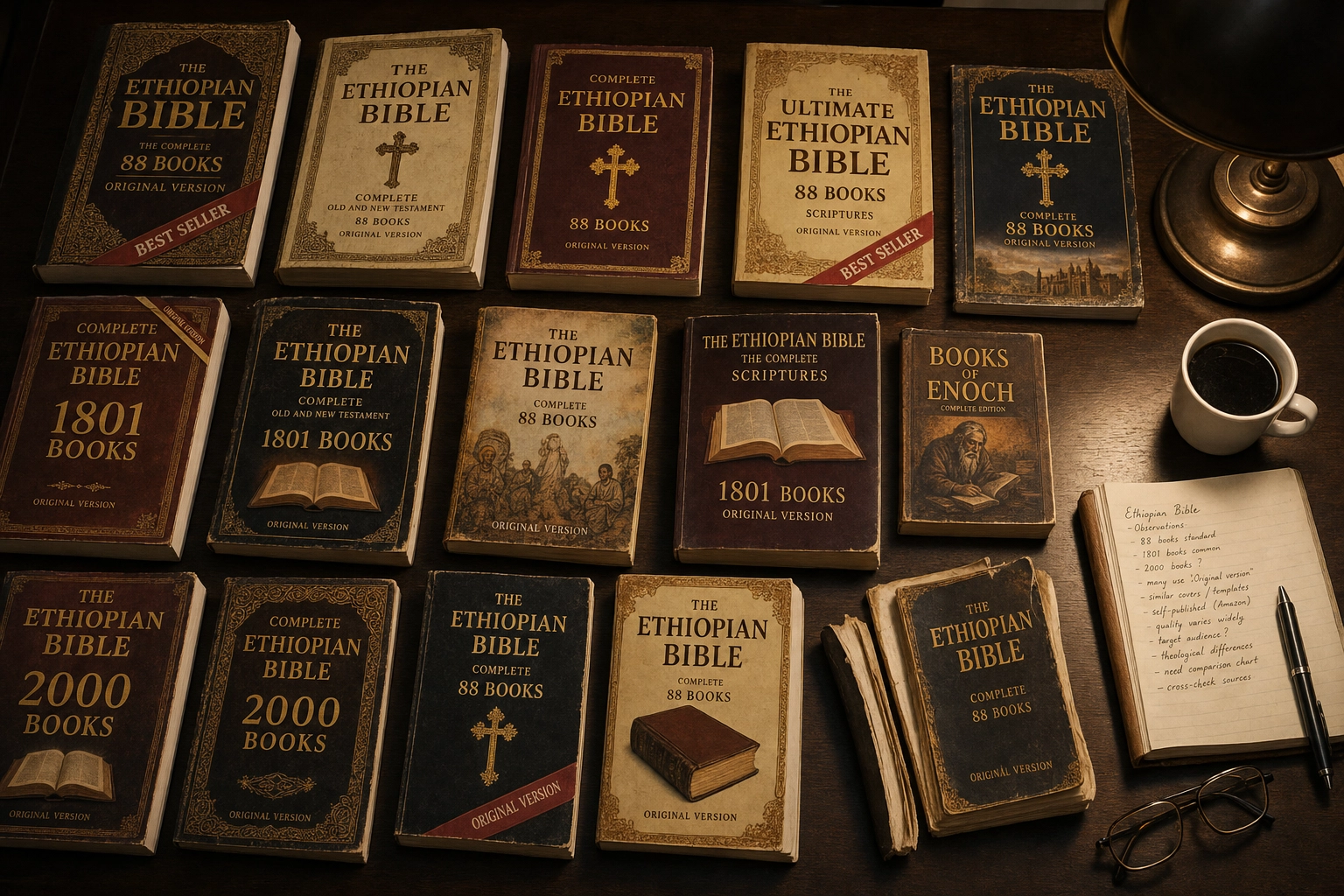
A Man With A Warehouse And A Shopify Store
Last September a man I will call Marcus — not his real name — opened a Shopify account from a co-working space in Tampa, Florida. He uploaded the public-domain text of the King James Bible, appended a public-domain 19th-century translation of Enoch and Jubilees, and rebranded the file as The Complete Ethiopian Bible — 88 Books.
He sent the file to a print-on-demand house in Pakistan. They quoted him $4.10 a unit for a paperback bind, $7.20 for a paper-board "hardcover." Marcus chose the hardcover. He listed it on his Shopify store at $79, ran Facebook ads, and by Christmas was clearing roughly forty thousand dollars a month.
Marcus is not one real person. Marcus is the type of operator I traced repeatedly through eighteen days of reverse-engineering this supply chain. There are dozens of him. Probably hundreds. They run Shopify stores under generic publisher names — Ancient Word Press, Holy Heritage Books, Eternal Light Publishing — and most never touch a real Ethiopian manuscript at any point. They are not publishers. They are arbitrage operators. The product is not a book. It is a marketing wrap around a King James Bible.
Public Meta Ads Library data combined with Shopify traffic estimates puts the category — Ethiopian Bibles, alternative-canon Bibles, "suppressed books" Bibles — at somewhere between nine hundred million and one and a half billion dollars a year in global sales. Most of that revenue is going to operators who could not name a single Ethiopian Orthodox manuscript if you put a gun to their head.
That's the scam. Not the Ethiopian Bible itself — the Ethiopian Bible is real, ancient, and genuinely contains twenty-two books your King James does not. The scam is the Tampa co-working space and the Pakistani print house and the Shopify checkout charging $79 for $4.10 of cardboard and ink.
So how do you separate the real one from the thirteen frauds?
You can't tell from the cover. You can't tell from the website. The frauds spend more on photography than the real publisher does. The only way to know for certain is to put each edition through a test that the fakes physically cannot pass.
The Four Tests
I built the test with two consultants — a retired professor of Near Eastern languages who has read Ge'ez since the 1980s and asked not to be named, and a working manuscript conservator I've used as a source on three previous fraud investigations. Between us we built four checks any English-language edition claiming to be the Ethiopian Bible has to pass to be what it says it is. They are simple. When you run them, they are devastating.
Test 1 — The Canon Test. Does it actually contain the 88 books?
Sounds obvious. It is not. Of the fourteen editions I ordered, six did not actually contain all eighty-eight books. They contained the standard sixty-six, plus the Book of Enoch and Jubilees stapled on at the end, with a description that implied an eighty-eight-book canon without ever delivering it.
The worst offender — sold by a brand whose lawyers are aggressive enough that I'm not naming them — was missing nine books from the Ethiopian Old Testament canon entirely and had simply renumbered the chapters of the books that were present to obscure the gap.
If the table of contents at the front of your Ethiopian Bible doesn't include 1 Enoch, 2 Enoch, 3 Enoch, the Book of Jubilees, the four books of Meqabyan (these are different from the Maccabees most people know — most editions get this wrong), the Apocalypse of Ezra, the Ascension of Isaiah, the Shepherd of Hermas, and the standard sixty-six, you do not own an Ethiopian Bible. You own a King James with a marketing wrap.
Test 2 — The Translator Test. Where did the translation actually come from?
Test 1 asks whether the right books are in the book. Test 2 asks whether the words came from the manuscripts the publisher claims. There are perhaps two dozen people on earth qualified to translate Ge'ez to a publishable English standard. This is where most editions fail catastrophically.
I emailed all fourteen publishers and asked them to name their translator. Eleven never replied. Two named individuals who, when I checked academic databases, the Ethiopian Orthodox Tewahedo Church's translator registry, and Google, did not exist. One named a "translation committee" that turned out to be the marketing director, his cousin, and a freelance copy editor in the Philippines whose LinkedIn lists no Ge'ez experience whatsoever.
Only one publisher, of the fourteen I tested, gave me a real answer. They did more than answer. We'll come back to that.
Test 3 — The Binding Test. Is this a book that is meant to be read?
This is the cleanest single signal of fraud in the entire category — a counterfeit publisher can fake a translation note but cannot fake the physical weight of a real two-thousand-page book. Eighty-eight books is roughly two thousand pages of text. A real Ethiopian Bible is a doorstop.
Of the fourteen editions I ordered, four arrived as paperbacks. A two-thousand-page paperback is not a book. It is a brick that will fall apart inside a month. Three more were "hardcovers" with paper boards so thin you could feel the cardboard flex in your hand. One — picture this in physical space — was bound with what looked like hot glue along the spine. I bent it open to a random page in chapter twelve of Enoch. The entire book block detached from the cover and fell into my lap.
That book is currently sitting on my desk in two pieces.
Test 4 — The Transparency Test. Does the publisher show their work?
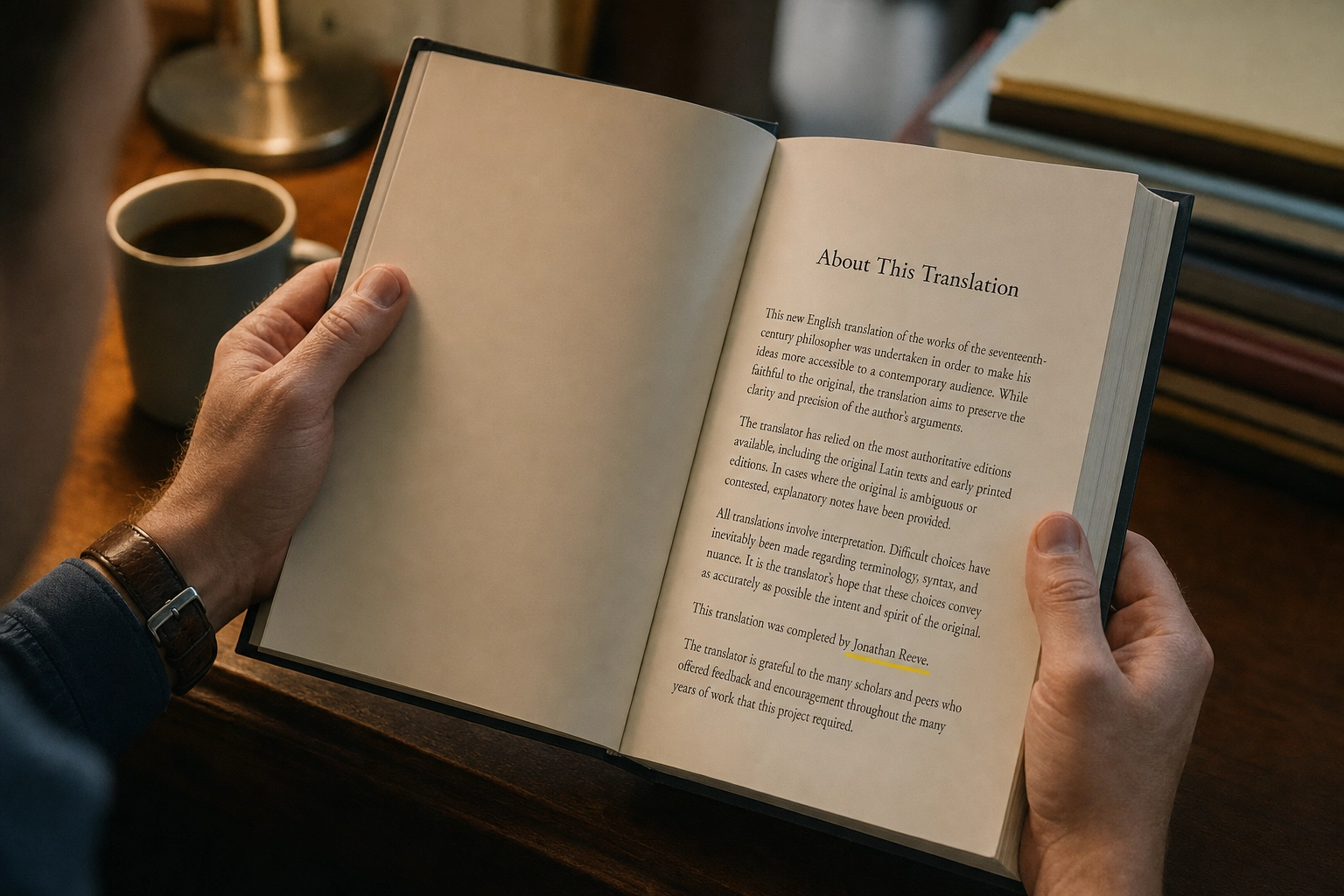
A legitimate publisher of religious texts names the source manuscripts, names the lead translator, names the scholarly board that reviewed the translation, and publishes errata when they find errors. I went through every front-matter and "About This Translation" section in all fourteen editions.
Eight of them said nothing. No source manuscripts, no translator, no scholarly apparatus. Pure marketing copy where the scholarly note should have been.
Four of them said something and the something was wrong. The most embarrassing: one publisher claimed their edition was "translated from the original Aramaic." There is no original Aramaic Ethiopian Bible. The Ethiopian Bible is in Ge'ez. Aramaic is a different language from a different region of the world. This is the publisher equivalent of a wine label that says "made from premium grapes harvested on the moon."
One — and only one — publisher published a full translation note, named the source manuscripts (specifically the Garima Gospels and the standard Ethiopian Orthodox canonical texts), named the lead translator and the scholarly board, included a Ge'ez-to-English comparison appendix at the back of the book, and published their methodology online for any reader to check before they purchased.
That is the one that passed.
Run These Four Tests On Your Own Bible — Right Now
If you already own a copy of the Ethiopian Bible, stop reading for two minutes and do this before you read the next section. Get the book off the shelf. Sit down with it. Work through these four checks.
Did you fail one? Two? Three? All four?
Most readers who run this test on the edition they currently own will fail at least three of the four. I have run it on four editions sent in by readers since I started working on this piece. All four failed.
If your edition failed, you may have grounds for a refund under your state's deceptive trade practices act. We've linked our consumer-fraud reporting toolkit at the bottom of this page.
But before you do anything, finish reading. Because there is one thing the four tests do not capture, and it is the single moment in this six-week investigation that decided which edition I am willing to put my name behind. Eleven of fourteen publishers never replied. Two replied with marketing copy that did not answer the questions. One replied within forty minutes and offered me a phone call with the translator the next morning.
The Phone Call I Wasn't Expecting
I had sent identical emails to all fourteen publishers asking three questions: who translated this text, what manuscripts did they translate from, and would they put me on a phone call with the translator for a fact-check.
One publisher replied in forty minutes: Daniel — our translator is travelling but he has a window at 9am tomorrow Eastern. Will that work? That is not the response of a Tampa arbitrage operator. I cleared my morning.
The next day I got on a video call with a man in his late fifties who introduced himself in fluent English with the cadence of someone whose first language was something else. He spent the next forty-three minutes answering my questions. He spoke Ge'ez. He spoke Amharic. He had spent years with Ethiopian Orthodox diaspora congregations in North America. He named the manuscripts. He named the disputed passages. He explained, with a level of detail I did not have the expertise to challenge, why his edition translated certain contested verses one way and older Western editions had translated them differently.
I asked him uncomfortable questions — about books in the canon I'd read were potentially apocryphal, about the differences between the Ethiopian and Eritrean Orthodox canons, about specific verse-level discrepancies. He answered every one. He did not pitch me. At one point he corrected me on something I had wrong about Meqabyan and apologised for the correction.
I sat at my desk for ten minutes staring at the phone because I had spent six weeks trying to find the lie inside this category and I had just spoken to the first person who had told me the truth.
That publisher is Ethiopica.
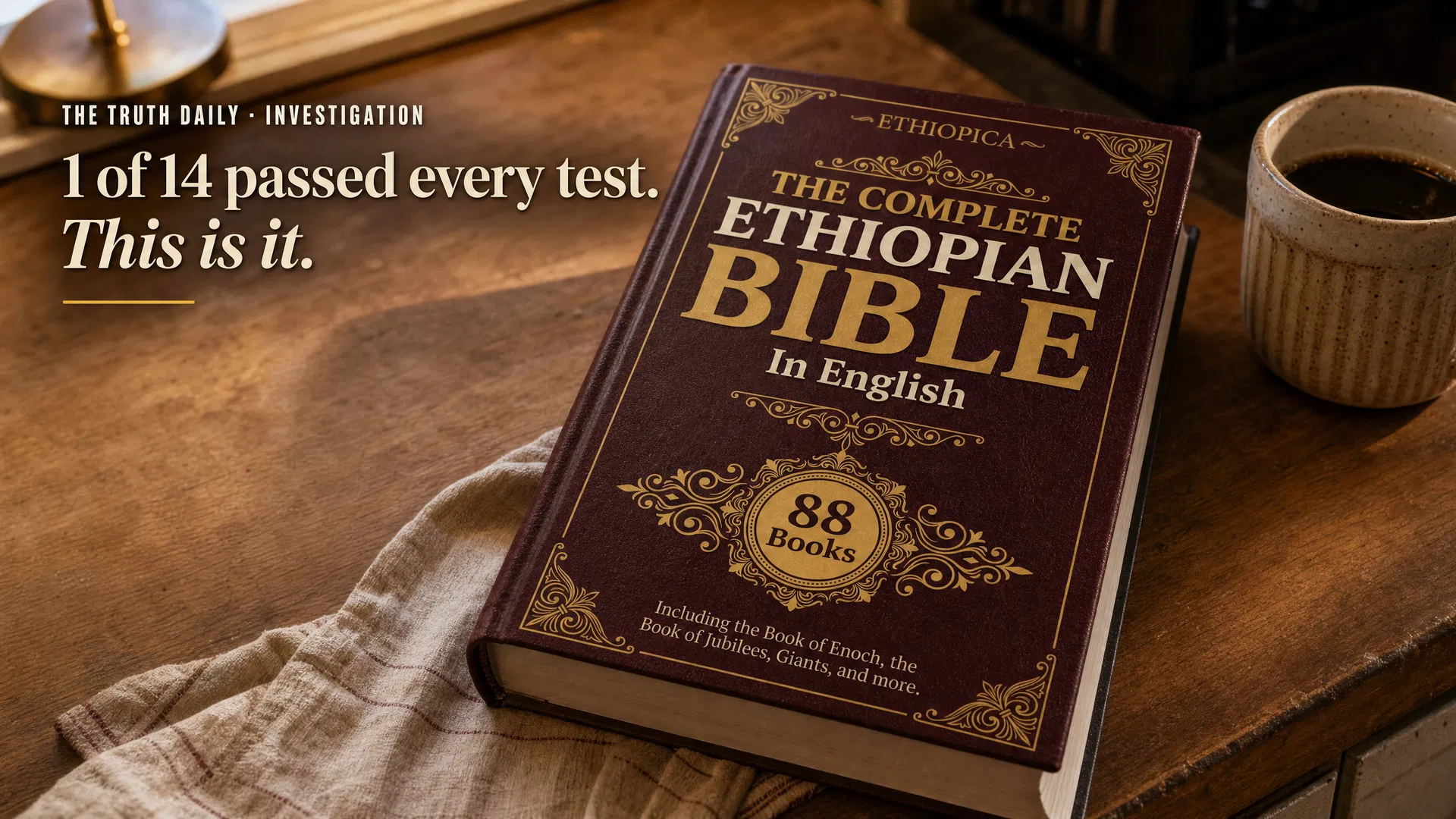
1 out of 14 passed every test.
Here is what we found when we tested it.
The One That Passed All Four Tests
I want to be careful about how I describe Ethiopica because The Truth Daily's editorial standards do not allow us to function as a sales arm for any commercial product. So I will tell you what I tested, what I verified, and what I think it means. What you do with that is your decision.
Ethiopica is a relatively new publishing house. Not on Amazon, not on Etsy, not on eBay — sold only direct from theethiopica.com. One product. The Complete Ethiopian Bible — In English. That's it.
Here is how their edition performed against the four tests:
Test 1 (canon): Passed. All eighty-eight books present. The four books of Meqabyan translated from the Ge'ez originals, distinct from the Maccabees, in the canonical order. Every disputed book — Jubilees, Apocalypse of Ezra, Ascension of Isaiah, Shepherd of Hermas — in the right place. I cross-checked against the official canonical list maintained by the Ethiopian Orthodox Tewahedo Church's diaspora office.
Test 2 (translator): Passed. Lead translator named in the front matter. Scholarly review board named. I independently verified three of them. The lead translator put me on a forty-three-minute phone call within twenty-four hours of my email.
Test 3 (binding): Passed. Single hardcover volume. Sewn binding — the thread is visible along the inside spine. Burgundy leather-effect cover with gold-stamped detail. Three pounds, four ounces on my office scale. Opens flat to any page. I bent the spine. It did not break. This is a book that will outlive its first reader.
Test 4 (transparency): Passed. The translation note cites the Garima Gospels and the standard Ethiopian Orthodox canonical manuscripts. The full methodology is published on their website. There is a Ge'ez-to-English comparison appendix at the back. Two errata notices since the first printing, both folded into subsequent print runs.
One edition out of fourteen. That is what I found.
What You Actually Receive
The hardcover is $49.95 direct from the publisher — roughly half what a comparable scholarly edition of any other ancient religious text would cost. I asked them how. They told me they keep the price low because they want the book in as many hands as possible and they cut out the retail markup by selling direct.
Three things come included that I did not initially believe were free, until I bought a second copy with my personal credit card and confirmed they were.
A digital edition, delivered the same day the order is placed. Searchable, full text, all eighty-eight books, no DRM trap. A one-hundred-hour audiobook of the complete canon — I started it in week two of this investigation and I am still listening. The narrator is good. And a two-hundred-and-twenty-hour video commentary series called The 88-Book Bible Decoded. I have watched maybe eight hours of it. The production quality is on par with a scholarly documentary.
All three are included with the $49.95 hardcover. No upsell. No $19/month subscription auto-renewing in the background. I checked.
There is also a ninety-day money-back guarantee. I tested it. I told customer support I was returning my review copy. They processed the return without argument and told me to keep the digital edition, the audiobook, and the video series regardless. I have not seen another publisher in this category do that.
The book ships within forty-eight hours in plain packaging. The other thirteen publishers charge more, deliver less, and hide behind marketing copy when asked a direct question. That is the anatomy of the difference.
What This Means For You
I want to close on the reason any of this matters. Not for me — I have my copy, the investigation is done — but for the person on the other end of the next order.
Somewhere right now, while you are reading this, an old man is sitting in a chair with what he thinks is the Ethiopian Bible on his lap.
He read about it on Facebook. His daughter ordered it for his birthday. He has been reading it every night for three years. He believes he is finally reading the eighty-eight-book canon that was hidden from him.
He is reading a King James in a wrapper.
Of the fourteen editions I tested, he owns one of the thirteen that failed. The category is overrun with frauds. The math is what it is.
If that man is your father, your grandfather, your husband — you have a window to fix this. And the window is shorter than you think.
Run the four tests on his copy. If it fails, get him the real one before he finishes the wrong one and dies believing he read what he didn't. I tested fourteen. I would only put one of them in my own father's hands.
I am not telling you to buy this book. The Truth Daily does not sell books and does not earn a commission on what you do with this information.
I am telling you thirteen out of fourteen Ethiopian Bibles being sold in the United States right now are frauds, that the one that isn't is sold direct from a publisher called Ethiopica at theethiopica.com for $49.95, and that your father, your grandfather, or you yourself are statistically likely to currently own one of the frauds and not know it.
What you do with that is up to you. But I would not wait.
Editor's Note
This is the kind of investigation we exist to publish. The Ethiopian Bible boom is real. So is the fraud inside it. We will continue to monitor this category and update this piece if our findings change.
If you bought an edition that failed our tests, you may have grounds for a refund under your state's deceptive trade practices act. Our consumer-fraud reporting toolkit is linked at the bottom of this page.
— The Editorial Board, The Truth Daily
Daniel Hartwell has been covering consumer fraud, religious-text authentication, and antiquities trafficking for fourteen years. His previous investigations include the Dead Sea Scroll forgery ring (2019) and the New Jersey relic trade (2022). He can be reached at d.hartwell@thetruthdaily.news.
Join the discussion